Observership Program listings for international medical graduates


Purdue Pharmacy Researcher Receives $2.4M NIH Grant To Fight Antimicrobial-resistant Lung Infections
WEST LAFAYETTE, Ind. — Qi "Tony" Zhou, a researcher in Purdue University's College of Pharmacy has received a $2.4 million grant from the National Institutes of Health to fight lung infections that have established a resistance to antimicrobial drugs.
Zhou is an associate professor in the Department of Industrial and Molecular Pharmaceutics, a Faculty Scholar and a faculty member of the Purdue Institute for Drug Discovery and the Purdue Institute of Inflammation, Immunology and Infectious Disease. He leads a team of multinational experts from Australia, Thailand and the United States in developing novel, patent-pending inhalation therapeutics for lung infections.
"We are providing a promising option to fight the global crisis of antimicrobial resistance," Zhou said. "The successful development of our invention could save tens of thousands of lives from a variety of deadly lung infections, including cystic fibrosis and ventilator-assisted pneumonia."
Zhou's research in antimicrobial resistance has yielded two U.S. Patents, four patent applications and more than 70 publications in peer-reviewed journals. The most recent peer-reviewed journal publications were in Pharmaceutics in March 2024 and Pharmaceutical Research in August 2022.
With the latest NIH grant, Zhou has now received six federal grants totaling $10 million, including three NIH R01 grants in the past eight years to support the inhalation therapeutics research.
The threat of antimicrobial resistance
Thomas Sors, director of scientific strategy and relations at the Purdue Institute of Inflammation, Immunology and Infectious Disease, said antimicrobial resistance represents a severe global health threat as pathogens increasingly evade traditional treatments.
"The Centers for Disease Control and Prevention note that each year in the U.S., drug-resistant infections affect over 2.8 million individuals and result in more than 35,000 deaths, highlighting the urgent need for innovative strategies to address this crisis," Sors said.
"According to the NIH, CDC and the Infectious Diseases Society of America, gram-negative 'superbugs' such as Klebsiella pneumoniae, Pseudomonas aeruginosa and Acinetobacter baumannii rank among the most dangerous multidrug-resistant microorganisms. Regrettably, the development of new antibiotics is lagging, and lung infections triggered by these resistant pathogens can be fatal."
Developing inhalation therapeutics for the lungs
Zhou said oral or intravenous administrations of many antibiotics are often not effective for treatment of lung infections in many patients due to very limited drug exposure at the infection site and systemic toxicity.
"This makes lung infections caused by resistant bacteria extremely difficult to treat, reflected by the fact that lung infections are the fourth leading cause of death in the world," Zhou said.
Zhou's inhalation therapeutics help antibiotics directly reach the infection site in the lungs to better kill the bacteria. Inhaled medicines also can avoid systemic toxicity because much fewer drugs are absorbed into the bloodstream.
"We also use the innovative manufacturing techniques of advanced spray drying to incorporate two or more synergistic antibiotics into a single particle so they can deposit at the same site of infection and achieve the maximum bacterial killing synergy," he said.
Next development steps
Preliminary animal studies showed superior bacterial killing capability and reduced toxicity of the new inhalation medicines.
Zhou said the team's goal is to develop viable pharmaceutical products to effectively treat resistant bacterial lung infections. The NIH funding will be utilized to optimize the formulation and generate preclinical data for potential filing of a New Drug Application.
"Zhou's cutting-edge research is a true breakthrough and perfectly exemplifies Purdue's commitment to fight the global crisis of antimicrobial resistance," said Eric Barker, the Jeannie and Jim Chaney Dean of Purdue's College of Pharmacy.
Zhou disclosed the inventions of inhalation medicines to the Purdue Innovates Office of Technology Commercialization, which has applied for patents to protect the intellectual property. Industry partners interested in developing or commercializing the work should contact Joe Kasper, assistant director of business development and licensing — life sciences, at jrkasper@prf.Org.
About Purdue Innovates Office of Technology Commercialization
The Purdue Innovates Office of Technology Commercialization operates one of the most comprehensive technology transfer programs among leading research universities in the U.S. Services provided by this office support the economic development initiatives of Purdue University and benefit the university's academic activities through commercializing, licensing and protecting Purdue intellectual property. In fiscal year 2023, the office reported 150 deals finalized with 203 technologies signed, 400 disclosures received and 218 issued U.S. Patents. The office is managed by the Purdue Research Foundation, which received the 2019 Innovation & Economic Prosperity Universities Award for Place from the Association of Public and Land-grant Universities. In 2020 IPWatchdog Institute ranked Purdue third nationally in startup creation and in the top 20 for patents. The Purdue Research Foundation is a private, nonprofit foundation created to advance the mission of Purdue University. Contact otcip@prf.Org for more information.
About Purdue University
Purdue University is a public research institution demonstrating excellence at scale. Ranked among top 10 public universities and with two colleges in the top four in the United States, Purdue discovers and disseminates knowledge with a quality and at a scale second to none. More than 105,000 students study at Purdue across modalities and locations, including nearly 50,000 in person on the West Lafayette campus. Committed to affordability and accessibility, Purdue's main campus has frozen tuition 13 years in a row. See how Purdue never stops in the persistent pursuit of the next giant leap — including its first comprehensive urban campus in Indianapolis, the new Mitchell E. Daniels, Jr. School of Business, and Purdue Computes — at https://www.Purdue.Edu/president/strategic-initiatives.
Writer/Media contact: Steve Martin, sgmartin@prf.Org
Writer: Jenn Stewart-Burton, jsstewar@purdue.Edu
Source: Tony Zhou, tonyzhou@purdue.Edu
Woman Died Of Aggressive Lung Infection - Inquest
A mum-of-three died due to an "aggressive" bacterial infection which caused lung damage she could not recover from, a coroner has concluded.
Hannah Plumb, 32, died at University Hospital Coventry in December 2022.
An inquest heard that Ms Plumb died of natural causes, but that hospital staff did miss a medical problem which came up on two X-rays while she was in critical care.
Dr Christopher Bassford told the inquest that he did not believe this impacted the outcome of her death, but Ms Plumb's partner of 14 years, Gavin Hughes, said he still thought it amounted to neglect.
At the inquest on Thursday, Dr Bassford said the pneumothorax, also known as a collapsed lung, external, affected one of her lungs and was "moderate".
It was captured on two X-rays but was only spotted by a team from a different hospital more than 12 hours later.
Dr Bassford said if it had been spotted earlier, doctors would have put in a chest drain to deal with it, but he did not believe it would have stopped her dying.
He said that individuals had been "spoken to about it".
To reduce the risk of it happening again, he said doctors were looking to roll out X-ray machines that could automatically detect the issue.
During the hearing he also apologised to Mr Hughes that staff were not able to communicate better with him at two points in her treatment.
Mr Hughes told the hearing that Ms Plumb was a "lovely partner and mother" to their three children, now aged 9, 11 and 12.
He said she started coughing and feeling unwell in mid-November, but thought it was just a sickness bug and did not try and get medical help.
After three weeks, she started vomiting a lot and did not have any energy.
Mr Hughes called 999 after his daughter told him Ms Plumb could not breathe, only to be told it would be a five and a half hour wait for an ambulance.
They took themselves to A&E but it was "very busy" and he went up to the desk five or six times to ask when she would be seen, he said.
She was then moved to intensive care and had a mortality risk of 29%, much higher than the threshold to be admitted to intensive care.
During treatment for the pneumothorax on 11 December, Ms Plumb suffered a catastrophic cardiovascular collapse and died, the hearing was told.
An independent post-mortem report found that she was suffering from necrotising pneumonia which was affecting both lungs.
There was destruction of lung tissue because of the infection, the autopsy found.
This "serious and aggressive" chest infection went on to cause sepsis and multiple organ failure, it said.
The coroner concluded that she had died of natural causes on the balance of probabilities.
Pneumonia: What To Know
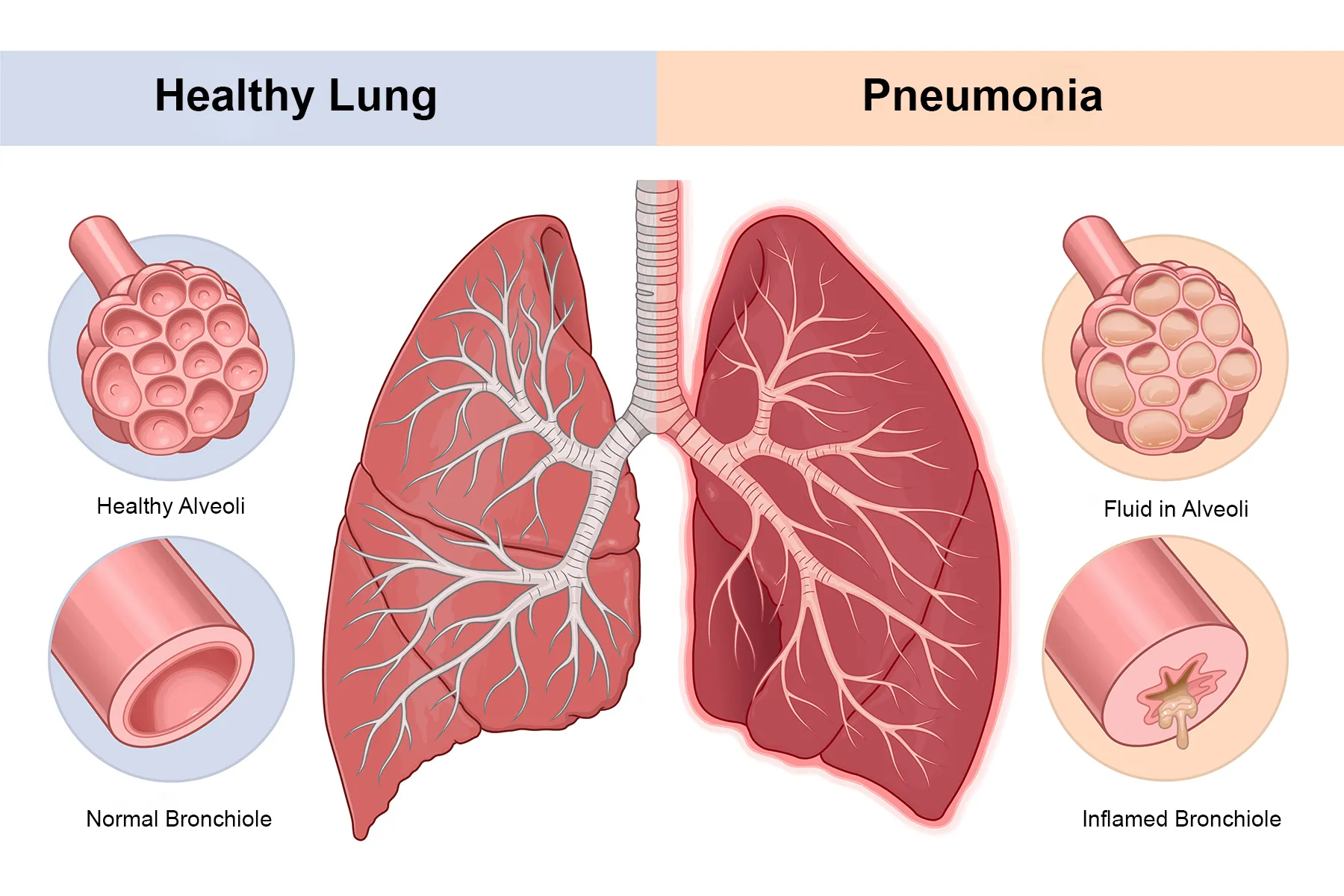
Pneumonia is a lung infection that can range from mild to so serious that you have to go to the hospital. It happens when an infection causes air sacs in your lungs (the alveoli) and tubes in your airways that connect to them (bronchioles) to fill with fluid or pus. That can make it hard for you to breathe in enough oxygen.
Anyone can get this lung infection. But children younger than 2 and people over 65 are at higher risk. That's because their immune systems might not be strong enough to fight it. Lifestyle habits, like smoking cigarettes and drinking too much alcohol, can also raise your chances of getting pneumonia.
You can get pneumonia in one or both lungs. Pneumonia in both lungs is sometimes called bilateral pneumonia or double pneumonia. You can also have pneumonia and not know it. This is sometimes called walking pneumonia.
Causes include bacteria, viruses, and fungi. If your pneumonia results from bacteria or a virus, you can spread it to someone else.
Pneumonia can be grouped into types based on what caused it. Many things can lead to pneumonia, but some of the most common are:
Bacterial pneumonia
More people get this type of pneumonia than any other. While several types of bacteria can cause it, the most common in the U.S. Is streptococcus. People sometimes get bacterial pneumonia after a viral infection like a cold or the flu.
Viral pneumonia
Viruses, such as cold and flu viruses, cause about a third of all cases of pneumonia. They're the most common cause of the condition in children under 5. This type of infection isn't usually as serious as bacterial pneumonia, but it can be. Viral pneumonia raises your risk of also getting bacterial pneumonia.
Fungal pneumonia
Fungi found in dirt or bird poop can also cause a pneumonia infection. This type is more likely to affect people with weaker immune systems, such as those who have long-lasting health problems.
Walking pneumonia
This is a nickname for a less serious type that's officially called mycoplasma pneumonia. It's named for the bacteria that causes it. Young adults and older children most often get this type, which often doesn't require bed rest.
Your symptoms can vary, depending on the cause of your pneumonia, your age, and your overall health. They usually develop over several days.
Common signs of pneumonia include:
Along with these symptoms, older adults and people with weak immune systems might be confused or have problems with thinking. They might also have a lower-than-usual body temperature.
The symptoms of viral pneumonia tend to come on slowly, and they are often mild at first. They may include:
If you have trouble breathing, coughing that doesn't stop, chest pain, or a fever of 102 F or higher, see your doctor.
Symptoms of pneumonia in babies
Babies with pneumonia may not show any symptoms. But they could seem tired or restless. They might also have a cough, fever, vomiting, or trouble breathing. It also may be hard for them to eat.
You get pneumonia when a potentially harmful substance that your body could usually fight off overwhelms your immune system and infects your lungs.
Viruses that can lead to viral pneumonia include:
Causes of bacterial pneumonia include:
Fungal pneumonia causes include:
Aspiration pneumonia
You can get aspiration pneumonia when you breathe in a foreign substance, like vomit, saliva, or food. You're more likely to get it if something has interfered with your gag reflex, such as a brain injury or overuse of drugs or alcohol.
Is pneumonia contagious?
Bacterial and viral types of pneumonia are contagious. The germs that cause them may spread through the air when someone who is infected talks, coughs, or sneezes. You might also get pneumonia after touching a surface that has the germs on it, then touching your mouth or nose.
Can the flu turn into pneumonia?
Influenza viruses can cause pneumonia, particularly in people who have other health conditions or are at higher risk of it for another reason
Can COVID turn into pneumonia?
The virus that causes COVID-19 can lead to pneumonia. It can also make you more prone to get an infection from other types of viruses or bacteria by weakening your immune system or causing you to need a ventilator.
Hospital-acquired pneumonia
If you get pneumonia while you're in a hospital, that's called hospital-acquired pneumonia. It tends to be more serious, since it can be caused by antibiotic-resistant bacteria and those who get it have other health issues. You might also hear the term health care-associated pneumonia. This refers more broadly to pneumonia you catch while in any health care facility, such as a long-term care facility or dialysis center.
Ventilator-associated pneumonia
You have ventilator-associated pneumonia if you get the infection while using a ventilator, a machine that helps you breathe.
Community-acquired pneumonia
Most cases are what's called community-acquired pneumonia, which means you didn't get it in a hospital.
Anybody can get pneumonia , though it most commonly affects babies and people over 65.
You're also at higher risk if you:
Your doctor will start with questions about your symptoms and your medical history, like whether you smoke and whether you've been around sick people at home, school, or work. Then, they'll listen to your lungs. If you have pneumonia, they might hear cracking, bubbling, or rumbling sounds when you breathe in.
If your doctor thinks you might have pneumonia, they'll probably give you tests, including:
If your symptoms started in the hospital or you have other health problems, your doctor might give you more tests, such as:
Pneumonia vs. Bronchitis
Like pneumonia, bronchitis can give you a long-lasting cough, fever, fatigue, and chest pain. You can also get pneumonia after having bronchitis. But bronchitis, which results from inflammation in the tubes that carry air to your lungs, tends to be much less serious. See your doctor if you have these symptoms so they can figure out which condition you have and how best to treat it.
Pneumonia can have several complications, including:
Your treatment will depend on what caused your pneumonia, how serious it is, and your overall health. Most people are able to recover at home with rest and medication.
Pneumonia medication
If you have bacterial pneumonia, you'll get antibiotics. Make sure you take all of the medicine your doctor gives you, even if you start to feel better before you're through with it.
If you have viral pneumonia, antibiotics won't help. You'll need to rest, drink a lot of fluids, and take medicine for your fever. Antiviral medications can work well against some, but not all, of the viruses that cause pneumonia.
Your doctor will prescribe antifungal medication to treat fungal pneumonia.
Atypical pneumonia treatment
Atypical pneumonia is caused by bacteria that are hard for doctors to detect with standard methods, such as mycoplasma and legionella. With a mild case, you may be able to recover with rest and self-care at home. If it's more serious, your doctor will treat it with antibiotics.
Pneumonia nebulizer
Your doctor may prescribe a nebulizer or inhaler to you or your child to help with breathing. But this won't treat the pneumonia itself.
Hospitalization for pneumonia
If your symptoms are serious or if you have other conditions that make you more likely to have complications, your doctor may send you to the hospital. While you're there, your doctor will probably give you fluids or antibiotics through an IV. You may need oxygen therapy or breathing treatments. And the doctors might need to drain fluid from your lungs.
How long does pneumonia last?
Depending on what type of pneumonia you have and how sick you are, it could take anywhere from a week to a month or more to recover. You'll probably feel fatigued for a month or so. Most people continue to feel tired for about a month. You need lots of rest while you're recovering, so don't try to rush it. Ask your doctor when you can return to your usual activities. Limit contact with other people while you're sick so you don't spread the germs that cause pneumonia.
Signs that pneumonia is improving
You can tell you're recovering when your symptoms improve. While you'll probably be tired for a while, you should notice:
There are some things you can do at home to ease your symptoms and help you recover:
To avoid pneumonia and the germs that can cause it, take these steps:
Pneumonia vaccine
There are two types of vaccines that can prevent infection with the pneumococcus bacteria, the most common cause of bacterial pneumonia. They're recommended for:
Children under 2, kids ages 2-5 who are at high risk for pneumonia, and those who go to group child care should also get a pneumonia vaccine.
A flu shot can also help prevent pneumonia in both kids and adults. So can vaccines that protect against:
Pneumonia is a lung infection most often caused by bacteria or a virus. It may be mild enough that you can recover at home, or serious enough to put you in a hospital. Vaccines can protect you against pneumonia. See a doctor if you have trouble breathing, chest pain, a high fever, or a cough that doesn't go away.
What are the 4 stages of pneumonia symptoms?
Bacterial pneumonia has four stages:
Pneumonia vaccine: How often?
Three pneumonia (pneumococcal) vaccines are widely used in the U.S.: PCV15, PCV20, and PCV23. PCV13 is an older vaccine, but it is still used occasionally. Doctors may use them for different people, depending on their age and health condition:
Your doctor can tell you how many shots you need and when.


Comments
Post a Comment